Why your first chess opening matters
Every beginner sits down at a chessboard and wonders what move to make first. Staring across sixty-four squares at sixteen opposing pieces, the number of possibilities feels endless. You can push any of your eight pawns forward or leap either of your two knights into action. Yet within just a few turns, a careless opening choice can leave your pieces tangled, your central territory surrendered, and your king exposed to sudden threats.
A chess opening is not merely a memorized list of initial moves. It is a coherent battle plan that mobilizes your army and establishes your stake in the center of the board. The opening determines the kind of middlegame you will navigate: a wild, open shootout filled with tactical shots, or a quiet, strategic struggle fought over pawn outposts and spatial advantages.
New players frequently ask whether they should invest their study time in the sharp tactical lines of the Italian Game, the unshakeable pawn fortress of the London System, or the classical spatial pressure of the Queen’s Gambit. Each of these three setups represents a distinct philosophy of chess. Understanding how they operate, what challenges they present, and how they shape your development as a player is the surest way to build a reliable repertoire.
Before examining specific move sequences, every aspiring player must grasp the underlying rules of engagement that govern all sound opening play. When you understand these foundational guidelines, navigating unfamiliar chess openings becomes a matter of applying logic rather than memorizing endless variations.
The three golden rules of the opening
Decades of chess literature and centuries of master play converge on three fundamental principles that govern the opening phase. Former World Champion José Raúl Capablanca outlined these imperatives in his classic 1921 work [1], demonstrating that violating them almost always yields an inferior position.
1. Control the center
The four squares in the physical middle of the board—e4, d4, e5, and d5—form the central arena of every chess game. Controlling these squares allows your pieces to radiate influence across both flanks. A knight planted on a central outpost controls up to eight squares, whereas a knight marooned on the rim controls only four. Occupying the center with pawns restricts your opponent’s mobility and creates natural avenues for your long-range bishops and queen.
In open games, White typically launches a central pawn forward with 1.e4 or 1.d4, immediately establishing a stake in the center and opening transit lines for other units [2].
2. Develop minor pieces with purpose
Development means moving your knights and bishops off their starting squares on the back rank and placing them where they can actively influence the game. Knights generally belong on natural developmental squares like c3 and f3 (or c6 and f6 for Black), where they guard central squares and prepare future outposts. Bishops should find diagonals where they pin enemy pieces or target weak enemy pawns.
Crucially, developing with purpose means avoiding the temptation to move the same piece multiple times during the opening. Every move you spend repositioning an already active piece is a tempo handed directly to your opponent. While you waste time with minor maneuvers, your opponent mobilizes another unit and seizes the initiative.
3. Ensure king safety through early castling
At the start of the game, your king stands in the center of the back rank, right behind the pawns that are most likely to advance and open up lines of attack. Leaving your king stranded in the middle of the board invites disaster once central files open.
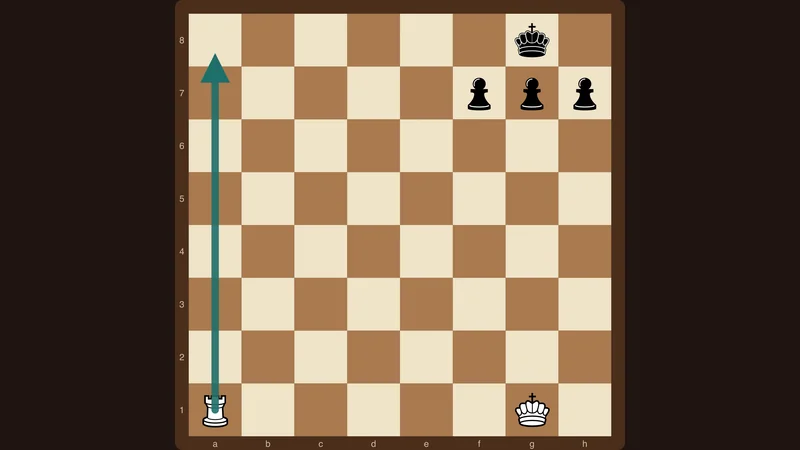
Castling achieves two vital objectives in a single turn: it tucks your monarch behind a protective shield of pawns on the flank, and it activates a rook toward the center where open or half-open files are about to appear. Players who master basic chess lessons quickly discover that castling within the first seven to ten moves prevents the majority of early tactical catastrophes, including the sudden disaster of a back-rank mate in chess.
The Italian Game: tactical vision and attacking f7
The Italian Game is one of the oldest recorded openings in chess history, dating back to the sixteenth-century manuscripts of Pedro Damiano and Giulio Cesare Polerio. It begins with the natural and harmonious moves:
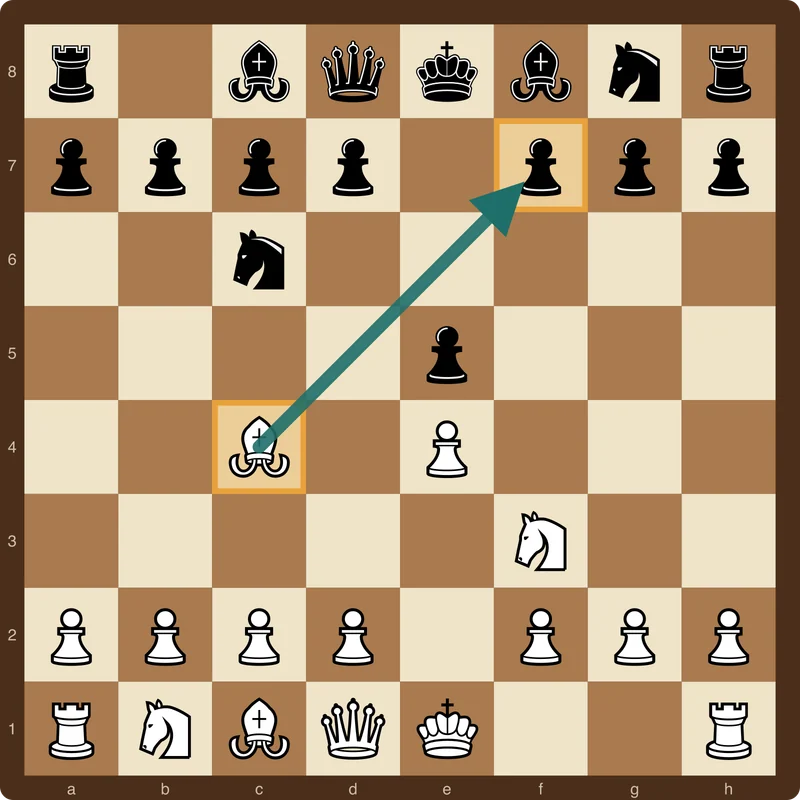
1.e4 e5 2.Nf3 Nc6 3.Bc4
White advances the king’s pawn two squares to claim e4 and open pathways for the light-squared bishop and queen. Black responds symmetrically with 1...e5, claiming central space. White then develops the king’s knight to f3, simultaneously attacking Black’s e5 pawn and preparing kingside castling. Black defends the threatened pawn with 2...Nc6, bringing a minor piece into the central fight.
On move three, White plays 3.Bc4, defining the Italian Game.
Targeting the weakest square on the board
The placement of White’s bishop on c4 is deeply purposeful. It aims straight down the a2–g7 diagonal at Black’s f7 pawn. In the initial starting array, the f7 square (and White’s corresponding f2 square) is uniquely vulnerable because it is defended solely by the king. Every other pawn on the second rank is protected by at least one piece—a rook, knight, bishop, or queen. The f7 pawn stands alone under royal protection.
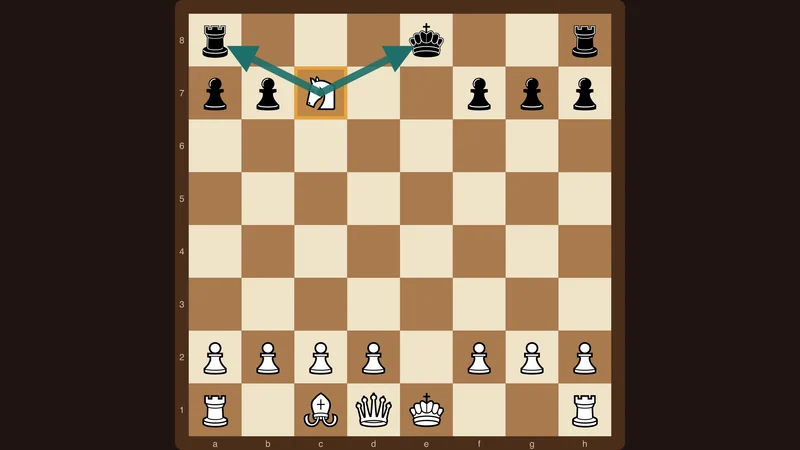
By directing a minor piece toward f7 on move three, White immediately creates tactical tension. If Black responds carelessly, White can rapidly ramp up the pressure with moves like Ng5, threatening forks on f7 that target both the black queen and rook. Recognizing these geometric patterns is closely tied to understanding forks, pins, and skewers in chess, as tactical combinations around f7 decide countless amateur contests.
Why coaches recommend the Italian Game first
The Italian Game is widely regarded by chess educators as the premier teaching opening for beginners. Because both players have pushed their e-pawns forward two squares, central pawn clashes often result in open files and diagonals. These open boards create clear sightlines for bishops and rooks, forcing both sides to stay alert to tactical threats, pins along diagonals, and double attacks.
Playing the Italian Game teaches you how pieces coordinate dynamically. You learn how to time central pawn breaks like d2–d4, how to execute the Fried Liver Attack or defend against it, and how to spot tactical opportunities the moment an opponent neglects development. It provides the tactical vocabulary you will rely on for the rest of your chess journey.
The London System: an unshakeable fortress
In recent years, the London System has exploded in popularity at every skill level, from casual club players to elite grandmasters. While the Italian Game thrives on dynamic, open tactical skirmishes, the London System is built on rock-solid structural stability.
The London System begins with White playing:
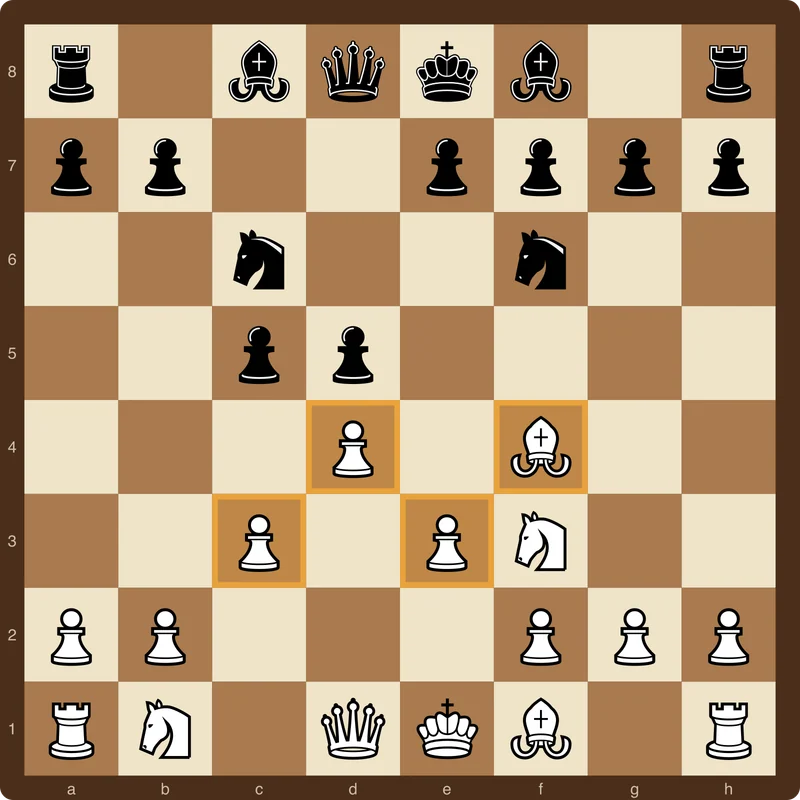
1.d4 d5 2.Bf4 (often preceded by 2.Nf3 and followed by 3.Bf4)
Instead of the classical 1.e4, White opens with the queen’s pawn. On move two, rather than challenging Black’s center directly or entering complex pawn gambits, White develops the dark-squared bishop outside the pawn chain to the active f4 square.
The solid pawn pyramid
Following the placement of the bishop on f4, White systematically constructs a triangular pawn barrier with moves like e2–e3 and c2–c3. Combined with the pawn on d4, this configuration forms a formidable pyramid.
In traditional queen’s pawn openings, White often plays e2–e3 early, which traps the dark-squared bishop behind its own pawns on c1. The defining virtue of the London System is that White develops the bishop to f4 before closing the door with e2–e3. The bishop breathes freely along the h2–b8 diagonal, surveying the board from outside the defensive wall.
With the pawn pyramid locked in place and knights developed to f3 and d2, White’s position becomes remarkably resilient against enemy attacks. Black cannot easily crack the central structure or manufacture surprise tactical ambushes on the kingside.
The benefits and the danger of autopilot
For beginners who find themselves frequently overwhelmed by sharp opening memorization or early tactical traps, the London System offers an immediate sense of security. Because White’s core setup—pawns on c3, d4, e3, bishop on f4, knights on f3 and d2—can be deployed against almost any defensive scheme Black chooses, you do not need to memorize dozens of specialized replies. You can reach a playable, balanced middlegame safely and reliably.
However, coaches issue one critical warning regarding the London System: do not play it on autopilot. Because the setup is so consistent, novices often fall into the trap of making their first six moves without looking at what their opponent is doing. If Black launches an aggressive strike against White’s b2 pawn with an early ...Qb6 or challenges the f4 bishop with ...Nh5, mindless piece placement can quickly turn a solid position into a passive, cramped defense. Use the London’s stability to learn strategic planning, not to switch off your tactical vigilance.
The Queen’s Gambit: fighting for spatial dominance
For players who appreciate classical balance, positional depth, and commanding central territory, the Queen’s Gambit stands as an enduring masterpiece. Played by World Champions from Alexander Alekhine and Garry Kasparov to modern grandmasters, it is one of the most respected openings in chess history.
The opening sequence begins with:
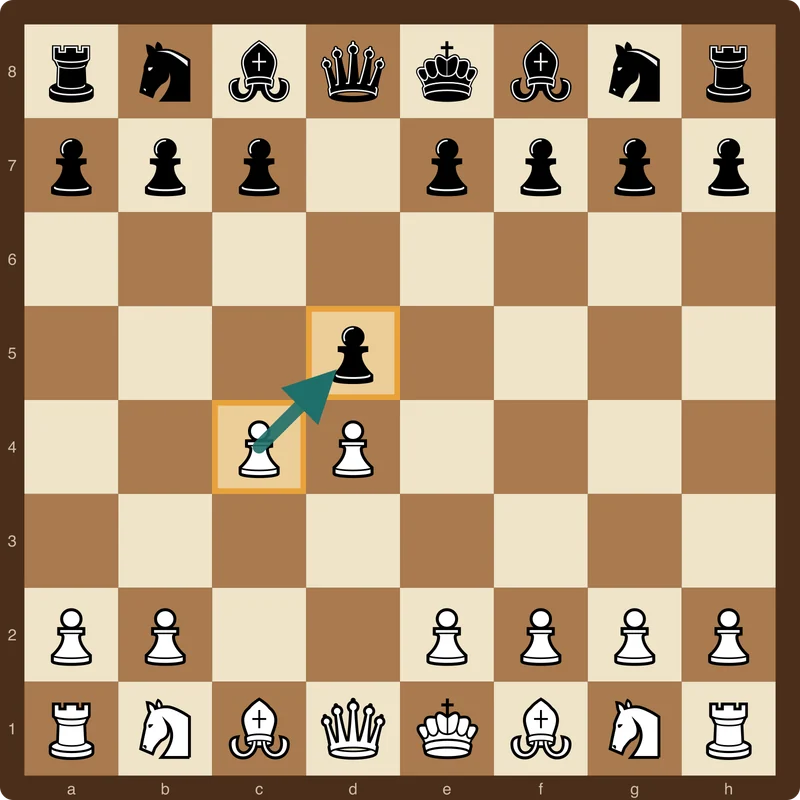
1.d4 d5 2.c4
White begins with 1.d4 and Black mirrors with 1...d5. On the very second turn, White thrusts the c-pawn forward to c4, directly offering a pawn sacrifice on the flank.
The mechanics of the wing gambit
Despite its name, the Queen’s Gambit is not a true gambit in the reckless sense, because White does not permanently surrender material. White offers the wing c4 pawn in order to entice Black’s central d5 pawn away from the center of the board [2].
If Black captures the offering with 2...dxc4 (the Queen’s Gambit Accepted), Black’s grip on the central d5 square is broken. White can immediately play e2–e3 or e2–e4, reclaiming the c4 pawn with the light-squared bishop while establishing commanding central pawn control. Black cannot successfully cling to the extra c4 pawn without severely compromising king safety and piece coordination.
If Black refuses the pawn with 2...e6 (the Queen’s Gambit Declined) or 2...c6 (the Slav Defense), Black establishes a sturdy pawn chain to defend d5. However, White retains long-term pressure against the center and enjoys superior piece mobility, with natural squares available for knights on c3 and f3 and rooks positioned along the semi-open c-file.
Positional depth from the first moves
In his influential 1925 treatise My System [3], master strategist Aron Nimzowitsch emphasized how pawn levers and central tension dictate positional dominance. The Queen’s Gambit is the ultimate practical masterclass in these ideas.
By challenging Black’s center on move two, White forces Black to make strategic concessions. You learn how to maneuver around pawn outposts, how to fight for control of open files, and how to execute minority attacks on the queenside. It requires a bit more positional patience than the Italian Game, but the strategic understanding it imparts will benefit every phase of your chess development.
Comparing the three openings: which one is right for you?
To choose the best opening for your current stage, consider what each system prioritizes and how it aligns with your goals at the board:
| Feature | The Italian Game | The London System | The Queen’s Gambit |
|---|---|---|---|
| First move | 1.e4 | 1.d4 | 1.d4 |
| Game style | Open, dynamic, tactical | Closed, solid, systematic | Semi-closed, strategic, positional |
| Primary target | Black’s weak f7 pawn | Harmonious development and solid center | Black’s central d5 pawn |
| Memorization required | Moderate (tactical lines) | Very low (universal scheme) | Moderate to high (positional structures) |
| Core lesson | Tactical vision and dynamic piece play | Structural safety and patience | Central pawn levers and spatial control |
The definitive recommendation: where to start
If you are a complete beginner or looking to build a rock-solid foundation for long-term improvement, start with the Italian Game.
Learning chess backwards—beginning with tactical open games—is the pedagogical method endorsed by the greatest trainers in history. In open 1.e4 positions, mistakes are punished swiftly and decisively. When you leave a piece undefended, you lose it immediately; when your opponent slips, you learn to spot the tactic that finishes the game. Developing sharp tactical eyesight is the single most important skill for players under master level.
Once you feel confident spotting forks, pins, and basic checkmating nets, you can branch out according to your personality:
- Choose the London System if you prefer peace of mind, want a reliable and low-stress opening for White, and wish to focus your study time on endgames and middlegame strategy rather than opening theory.
- Choose the Queen’s Gambit if you enjoy strategic maneuvering, love building imposing pawn centers, and want to master the positional arts of spatial restriction and pawn structure management.
Common beginner opening mistakes to avoid
Whichever opening you choose, avoiding common early pitfalls is just as crucial as knowing your first three moves.
1. Bringing the queen out too early
Many beginners fall in love with the idea of delivering a fast four-move checkmate (the Scholar’s Mate) and rush their queen to h5 or f3 on move two. Against competent opponents, this strategy backfires spectacularly.
Your queen cannot win the game alone. When you deploy your most valuable piece early, your opponent simply develops minor pieces while attacking your queen with tempo. You find yourself repeatedly running away with your queen while your opponent effortlessly mobilizes their entire army and seizes complete control of the center [1]. Keep your queen home until your minor pieces are developed and your king is safe.
2. Hunting pawns while development lags
Greed in the opening is almost always fatal. Grabbing an undefended flank pawn with your queen or bishop while your king is still uncastled and your other pieces remain asleep on the back rank allows your opponent to open lines and launch a devastating counterattack. Prioritize piece mobilization and king safety over petty material gains.
3. Pushing too many flank pawns
Pawns cannot move backward. Every time you push a pawn on the edge of the board, such as h2–h4 or a2–a4, without a clear central purpose, you weaken the squares left behind and waste a valuable move that should have been spent developing a knight or bishop. Win the battle in the center before looking toward the flanks.
4. Forgetting to castle
Delaying castling because there is no immediate threat on the board is a dangerous habit. Modern chess is fast; lines can open in a single turn through pawn sacrifices. Castle early, tuck your king behind a wall of pawns, and enjoy the peace of mind that comes from a well-fortified monarch while you play chess online.
Questions people ask
Do I need to memorize dozens of opening moves as a beginner?
No. Memorizing deep opening variations is one of the most common wastes of study time for newer players. Games below intermediate levels are almost never decided by subtle opening inaccuracies on move fifteen; they are decided by tactical blunders in the middlegame. Understanding opening principles—controlling the center, developing pieces, and castling—will guide you through your first ten moves far more reliably than rote memory.
Is the London System bad for beginner development?
The London System is not bad in itself, and it is a respected grandmaster opening. The danger for beginners lies in relying on it as an intellectual crutch. If you only play the London System, you may miss out on learning how to navigate open, volatile tactical positions where every tempo counts. Balancing your experience by playing open games like the Italian Game ensures you develop sharp tactical vision alongside positional solidity.
What should I play as Black against 1.e4 and 1.d4?
As Black, mirror sound opening principles. Against 1.e4, responding with 1...e5 leads into classical territory where you can contest the center directly and play solid setups like the Italian Game defense (Giuoco Piano) or the Two Knights Defense. Against 1.d4, responding with 1...d5 gives you equal central presence and allows you to play the Queen’s Gambit Declined with 2...e6 or the solid Slav Defense with 2...c6.
How many openings should a beginner know?
One opening as White and two basic defenses as Black (one against 1.e4 and one against 1.d4) are all you need to build a comprehensive repertoire. Deepening your understanding of a single opening system will teach you far more about chess than dabbling in a dozen different setups.
Sources
- Capablanca, J. R. (1921). Chess Fundamentals. London: G. Bell and Sons.
- Wikipedia. “Chess opening.” Overview of opening principles, open games, and closed systems.
- Nimzowitsch, A. (1925). My System. Berlin: B. Kagan.
- Boardgammon. “Chess openings: Principles and essential lines.”
- Boardgammon. “Chess lessons: Learn to play chess from the first move.”
- Boardgammon. “Chess Moment: Play rated chess online.”
Found a mistake or an odd phrase? Tell us